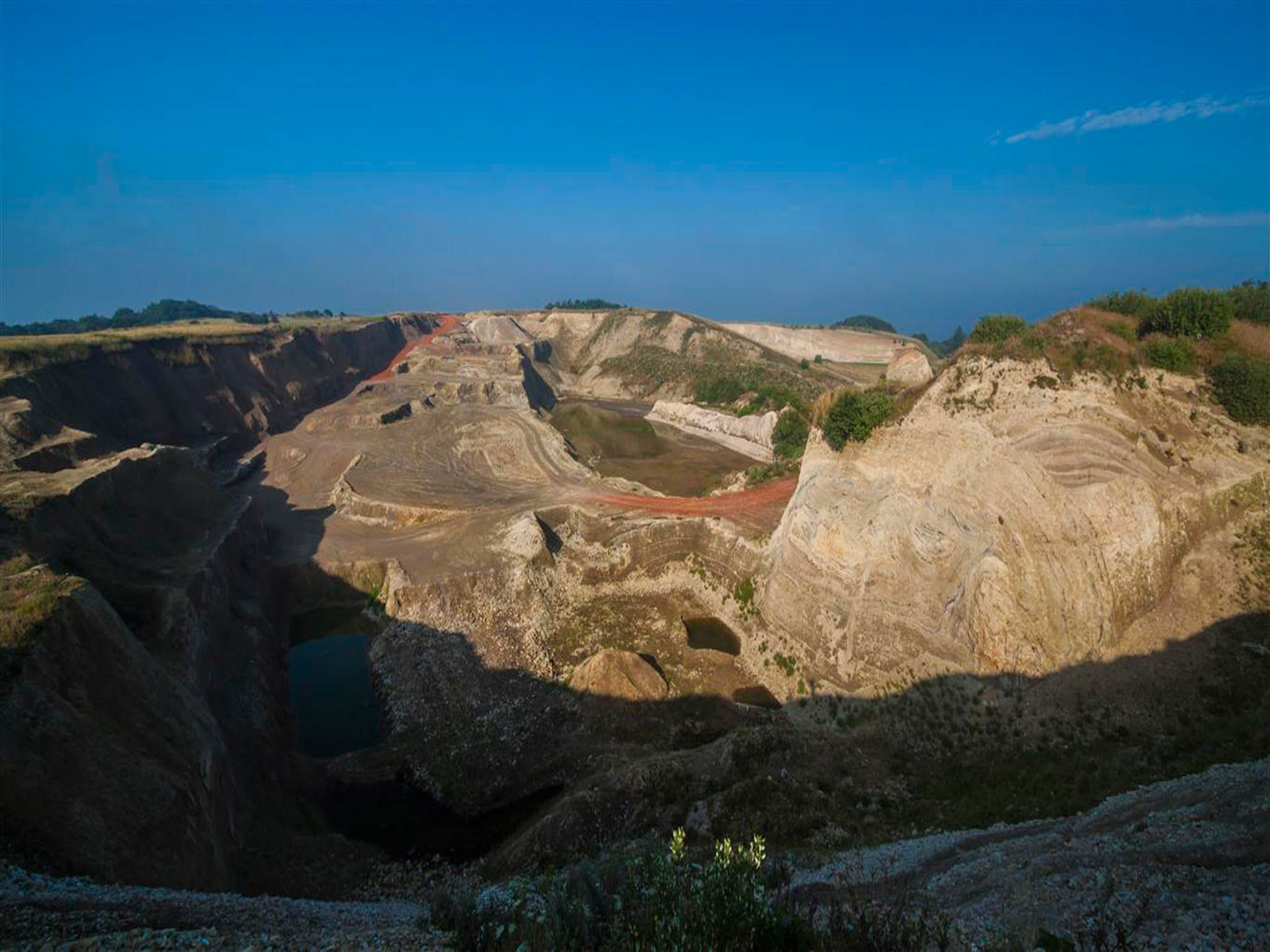
Molergraven
Fur is known for its jetty, which is exclusively linked to the scenic hill country. The mole was deposited on the bottom of a sea that covered most of Denmark 55 million years ago. The mole is known for its content of well-preserved fossil fish, insects, reptiles and plants. The molar contains approx. 200 volcanic ash layers, which have been formed during repeated eruptions in connection with the opening of the North Atlantic between Norway and Greenland.
In 1919 begins the first mining of the molar, which was exported in the raw state. Today, most of the molars are processed on the island, and the grinding industry has developed into a significant factor in Fur's economy.
If you find special fossils then make sure that they are not covered by the Danekre legislation before taking them with you.


Leave a Reply